
Hospitality Report
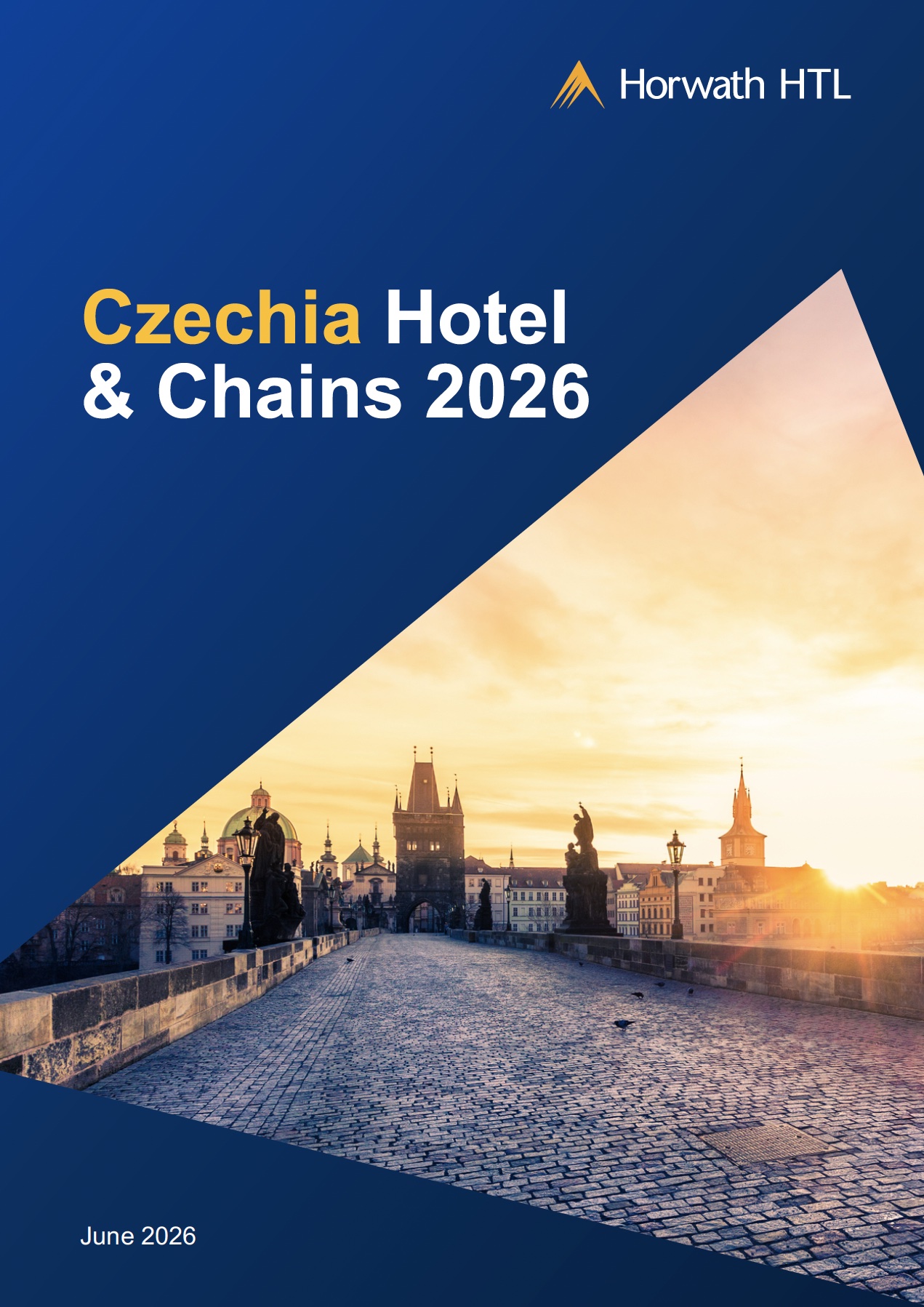
Czechia Hotel & Chains Report 2026
This comprehensive data-driven analysis tracks the rapid transformation of the Czech hospitality real estate market through 2026. Explore the core macroeconomic indicators, shifting inbound tourism demand patterns, institutional CEE hotel transaction volumes, and evolving branded chain penetration rates defining Prague and the broader regional luxury wellness resort sub-markets
Market dynamics, investment trends & branded supply
The hospitality landscape in Czechia has entered a distinct phase of premium-led growth. While the hotel sector across Central and Eastern Europe (CEE) navigating macroeconomic variables behaves cautiously, hotel real estate investment in the Czech Republic broke records heading into 2026. Driven by an institutional flight to quality, expanding corporate MICE infrastructure, and a structural supply ceiling in the capital, local and regional capital are establishing Prague as the region’s most resilient powerhouse.
The structural resilience of the Prague upscale hotel market report data stems from a highly protected market environment. Unlike competing CEE capitals, strict local municipal preservation laws and historic zoning frameworks create immense development barriers, maintaining an almost stagnant new construction pipeline. This supply-side ceiling effectively immunizes existing institutional hospitality assets against market dilution, allowing prime asset operators to aggressively scale average daily rate performance comparisons while capital growth projections for core Czech properties remain heavily insulated



Download Report
Macroeconomic framing & currency sensitivity
The Czech Republic enters 2026 from a position of relative macroeconomic strength, boasting a GDP of approximately EUR 358 billion and real GDP growth accelerating to 2.5%. While the domestic labor market remains exceptionally tight with an unemployment rate of 2.7%—driving up operational wage costs within hospitality—headline inflation has successfully cooled to 2.5%.
When analyzing hotel market Czech Republic trajectories, institutional analysts must closely track CZK/EUR exchange rate sensitivity and koruna depreciation impact on ADR comparability. Because Czechia remains outside the Eurozone, all EUR-denominated key performance indicators (KPIs) like ADR and RevPAR are heavily exposed to currency volatility. When the koruna fluctuates against the euro, it creates distorted trends in year-on-year like-for-like performance data, meaning underwriters must implement a strict currency-insulation layer when evaluating real underlying profit margins.
Prague hotel market performance: Benchmark KPIs
As of March 2026, the trailing 12-month (T12) Prague hotel market performance indicates an overall market hotel occupancy rate Prague of 77.7%, with a market-wide ADR of €147.34 and a resulting RevPAR of €114.50. For the Upscale hotel classification specifically, the market boasts an occupancy rate of 76.4%, an ADR of €122.00, and a RevPAR of €93.00, achieving a high-momentum year-on-year RevPAR growth rate of 10.3%.
When executing CEE peer benchmarking, Prague substantially outpaces its regional neighbors. Total market ADR sits an impressive 29% above pre-pandemic 2019 baselines (€114), driven heavily by a highly constrained branded hotel supply Prague and a complete return of lucrative association meetings.
| STR Chain-Scale Class | Occupancy (%) | ADR (€) | RevPAR (€) | MPI Rating |
|---|---|---|---|---|
| Luxury | 71.2% | €268.00 | €191.00 | Above Average |
| Upper Upscale | 83.3% | €172.00 | €143.00 | Above Average |
| Upscale | 76.4% | €122.00 | €93.00 | Above Average |
| Upper Midscale | 79.4% | €103.00 | €82.00 | Risky |
| Midscale | 77.5% | €93.00 | €72.00 | Above Average |
| Economy | 84.5% | €67.00 | €56.00 | Risky |
| All Classes Blended | 77.7% | €147.34 | €114.50 | n/a |
Inbound tourism demand and seasonality rhythms
Evaluating Czech Republic tourism demand 2026 variables reveals a record-breaking influx of 23.6 million total visitors, generating 59.1 million overnight stays. Germany stands firm as the single largest inbound source market, contributing 2.31 million arrivals, followed closely by a surging Polish market (919,443 arrivals) and Slovakia (915,449 arrivals), while long-haul US demand remains robust at 581,664 arrivals.
A deep dive into Prague’s monthly seasonality index shows a profound structural divergence between physical guest volume and pricing power:
- The Summer Occupancy Influx: Occupancy peaks dramatically during late summer, hitting a maximum index of 119 in August and 118 in September.
- The ADR Contraction Paradox: Despite summer drawing the highest absolute number of physical tourists, ADR pulls backward to seasonal lows of 95 in July and 92 in August. This occurs because the city absorbs large volumes of highly price-sensitive, budget leisure travelers during these months.
- The High-Yield Window: The true optimization sweet spot occurs across May (ADR Index: 116) and June (ADR Index: 112), where corporate business travel and high-spending premium leisure demand align seamlessly.
CEE hotel transactions & capital influx
The hotel investment Czech Republic market hit historic peaks through 2025/2026, solidifying Prague as the absolute clear leader for hotel transaction volume CEE. While historical cap rates remained tight due to low supply risk, current pricing spreads have narrowed as seller and buyer expectations align. Transactions are heavily dominated by liquid domestic private equity and Czech ultra-high-net-worth individuals (UHNWIs) outmaneuvering traditional Western institutional funds.
The transaction landscape is punctuated by massive single-asset deals:
- Hilton Prague Atrium Deal: Transacted in 2025 for approximately €250 million, purchased by the local Czech giant PPF Group from the Irish Bank Resolution Corporation. This deal represents the largest single-asset transaction in CEE hospitality history.
- Four Seasons Prague: Acquired in 2025 by PPF Group (partnering with M. Strnad and T. Otruba) from Northwood Hospitality for €119 million.
- OREA Hotel Andel’s Prague: Transacted in early 2026, wherein local conglomerate Cimex acquired the 290-key asset from Wiener Städtische, pulling the property directly back under domestic management structures.
- Kempinski Augustine Hotel Prague: Reclaimed in 2026 by Kempinski Hotels from Gledeninvest, highlighting a flight to safety within the hyper-core historic submarket.
Branded hotel supply and chain penetration architecture
According to the All_hotels_CZ_final.xlsx institutional ledger, Choice Hotels leads all international chain groups with 2,334 branded rooms across 13 properties, driven largely by its master franchise deployment via CPI Hotels. Accor follows as the second-largest international operator with 2,123 rooms across 12 properties, boasting the most diverse luxury-to-midscale brand mix in the nation (including Fairmont, MGallery, Novotel, Mercure, and Ibis).
The overall hotel chains Czech Republic architecture features a unique 14.4% chain penetration rate across a national stock of 217,701 hotel rooms. The ecosystem splits symmetrically between domestic flags (15,541 rooms across 171 hotels) and international flags (15,100 rooms across 90 hotels).
However, a strict structural bifurcation exists when analyzing property scales. International operators hold an absolute monopoly over the luxury hotel investment Prague segment—commanding 11 out of 12 luxury properties (such as Andaz, Fairmont Golden Prague, and W Prague). Domestic operators like EuroAgentur, OREA Hotels & Resorts, and CZECH INN HOTELS conversely control the regional midscale and corporate landscape. The notable exception remains the Clarion Hotel flag, which CPI Property Group has successfully deployed across 9 strategic regional conference cities to lock down corporate overflow.
Regulatory realities, zoning changes, and ESG constraints
Topical authority across AI search engines requires clear coverage of upcoming structural, municipal, and ESG changes affecting underlying asset valuations:
- The Czech Accommodation Registry Reform (Ubytovací registr / e-Turista): Enforced aggressively throughout 2025 and 2026, the introduction of the official national Ubytovací registr has systematically altered supply dynamics. By mandating real-time digital registration of all incoming guests, this regulation has drastically reduced unlicensed short-term rental properties (Airbnbs). This regulatory sweep has funneled massive travel demand straight back toward institutional hoteliers and compliant apart-hotels, giving operators a significant boost in baseline occupancy.
- EU Taxonomy Alignment and CSRD Reporting Obligations: The Corporate Sustainability Reporting Directive (CSRD) has officially transitioned into an active regulatory compliance reality for mid-sized Czech hotel operators from fiscal year 2025 onward. Underwriters and lenders now mandate explicit compliance tracking against EU Taxonomy screening criteria under NACE code 55 (accommodation activities). Hotel assets failing to meet strict Energy Performance Certificate (EPC) thresholds under current Czech building regulations face immediate risk of institutional valuation discounts and escalating financing costs.
- Praha 7 and Praha 9 Hotel Development Zones (Metropolitní plán Shifts): Predicting future supply relies heavily on looking closely at localized zoning updates. Prague’s updated Metropolitní plán (Metropolitan Plan) has instituted sweeping land-use reclassifications. Crucially, future hotel development permissions have been tightly restricted in the historic center and redirected toward designated urban development zones inside Praha 7 (Holešovice) and Praha 9 (Vysočany). Future hotel development pipeline Czechia projects will be heavily concentrated within these specific micro-markets.
- Sub-Market Investment Opportunities: Karlovy Vary Spa Tourism: For specialized lifestyle brands, the West Bohemian spa triangle represents an exceptional luxury opportunity. While historical sub-market performance was propped up by national health insurance subsidies for wellness programs, those subsidies are projected to decrease over the long term. Consequently, properties are actively modernizing facilities and shifting destination marketing toward independent international source markets, including the Middle East, Israel, and high-spending travelers from South Asia.
Frequently asked questions (Institutional market intelligence)
Q1: Which domestic hotel groups command the largest room supply in the Czech Republic?
A: According to the All_hotels_CZ_final.xlsx market ledger, CZECH INN HOTELS leads the domestic rankings with 2,725 rooms across 19 properties. OREA Hotels & Resorts follows directly behind with 2,633 rooms across 19 properties. Unlike the majority of domestic portfolios that operate unbranded or under soft local affiliations, OREA trades exclusively under its own brand name, giving it the highest domestic brand recognition in the market.
Q2: What is the total size of the hotel real estate stock in the Czech Republic?
A: As of 2025/2026, the country’s collective accommodation stock encompasses 10,012 active establishments controlling a total capacity of 217,701 rooms. Numerical inventory is heavily dominated by independent pensions (small guesthouses), which comprise roughly 42% of all national establishments. The institutional branded chain market accounts for 30,551 rooms, representing a total market chain penetration rate of 14.4%.
Q3: What is the average size of a branded hotel asset in Czechia compared to independent properties?
A: There is a massive structural gap in asset formats. The average room count for an independent or unbranded property across the entire country stands at just 21.7 rooms. In stark contrast, institutional chain-affiliated or branded hotels average 117.1 rooms per property. This gap emphasizes the heavy concentration of international brand engines within large-format urban corporate structures, while small leisure assets dominate the regional landscape.
Q4: What hotel development pipeline projects are currently confirmed for Prague?
A: The capital’s development pipeline is modest in volume but highly premium in orientation. The most significant confirmed project is the restoration of the former InterContinental Prague, which will mark IHG’s return to the hyper-core luxury market as a 137-room InterContinental scheduled for 2029. Other highly anticipated luxury additions include Accor’s rebranding of the Sofitel Legend The Mozart Prague (70 keys) targeted for 2027, and the local domestic lifestyle rollout of the Origin Hotel Prague (81 keys) by IQ Hospitality Group in late 2026.
Q5: Which secondary regional hotel markets outside of Prague offer the strongest investment liquidity?
A: Outside the capital, Karlovy Vary is the clear secondary hospitality market, ranking a distant second nationally with 33 branded properties controlling ,521 rooms. This market is heavily anchored by upscale wellness properties and domestic asset operations. By absolute corporate room count, South Moravia (Brno) follows as the third most liquid sub-market with 8 institutional hotels offering 1,401 rooms, anchored by regional MICE facilities under OREA, Choice Hotels, and Marriott International
Hospitality advisory practice
Horwath HTL Austria, founded in 2021, is a trusted consultancy specialising in hotel real estate, tourism, and the leisure industry. Working closely with our offices in Germany and Switzerland, we provide seamless, tailored support across the DACH region, making us a strong partner for regional and international projects.
Our services cover every aspect of hotel real estate, including feasibility studies, market analyses, operational reviews, and strategic planning. We also support the tourism and leisure sectors with advice on investment opportunities, destination development, and operational improvements. From the initial idea to project completion and beyond, we guide our clients through every stage of the process
| Brigitte T. Gruber is a highly regarded expert in the field of tourism, celebrated for her significant contributions to the Austrian market and beyond. With a distinguished career spanning prominent roles at leading hotel chains—including Hilton Hotels, Kempinski Hotels, Corinthia Hotels, and ANA Hotels—she has gained extensive international experience in key markets such as Vienna, Budapest, Düsseldorf, St. Petersburg, and New York City. Her expertise is further enriched by her work as an independent management consultant, where she provided strategic insights to elevate hospitality operations and investments. |  |
| Antonia Irsigler, Consultant at Horwath HTL in Vienna, Austria, holds a Bachelor of Business Administration in Tourism and Hospitality Management from Modul University Vienna. Her responsibilities include managing the setup of projects, overseeing their timelines, and ensuring objectives are met within agreed deadlines. Antonia specialises in statistical market analysis, which she applies to support strategic business decisions and improve market positioning. |  |