Sustainability Insight
Over-tourism in Europe during the festive season
A stress test for destinations
Europe is heading into the Christmas–New Year peak with travel demand already running hot.
As Europe approaches the Christmas and New Year holidays, tourism flows are once again concentrating heavily in major cities and festive destinations.
Winter pressure is urban, intense, and highly concentrated in time and space.
Europe remains the world’s largest tourism region, with 625 million international tourists between January and September 2025, a 4 % increase over 2024, indicating continued strong rebound and growth.
Put simply: the holidays won’t just be “busy.” They’ll be pressure-tests for city centres, infrastructure, housing, and resident tolerance.
The European Travel Commission (ETC) reports that:
- Around 70–75% of Europeans plan to travel between November and early January
- City destinations dominate winter travel intentions, especially for short stays and festive events
Taken together, this suggests that tens of millions of trips will take place across Europe during the Christmas–New Year period alone, with a disproportionate share concentrated in a limited number of cities and historic centres.
Cities under pressure during the holidays
Winter overtourism primarily affects large, iconic European cities, not seasonal resort destinations. The most exposed include:
- Paris – shopping, museums, year-end events, international arrivals
- London – retail, theatre, cultural tourism, transport congestion
- Vienna – Christmas markets + heritage core
- Prague – compact historic centre, high day-visitor ratio
- Amsterdam – city centre crowding despite active management policies
- Venice – year-round day-trip pressure, even outside peak summer
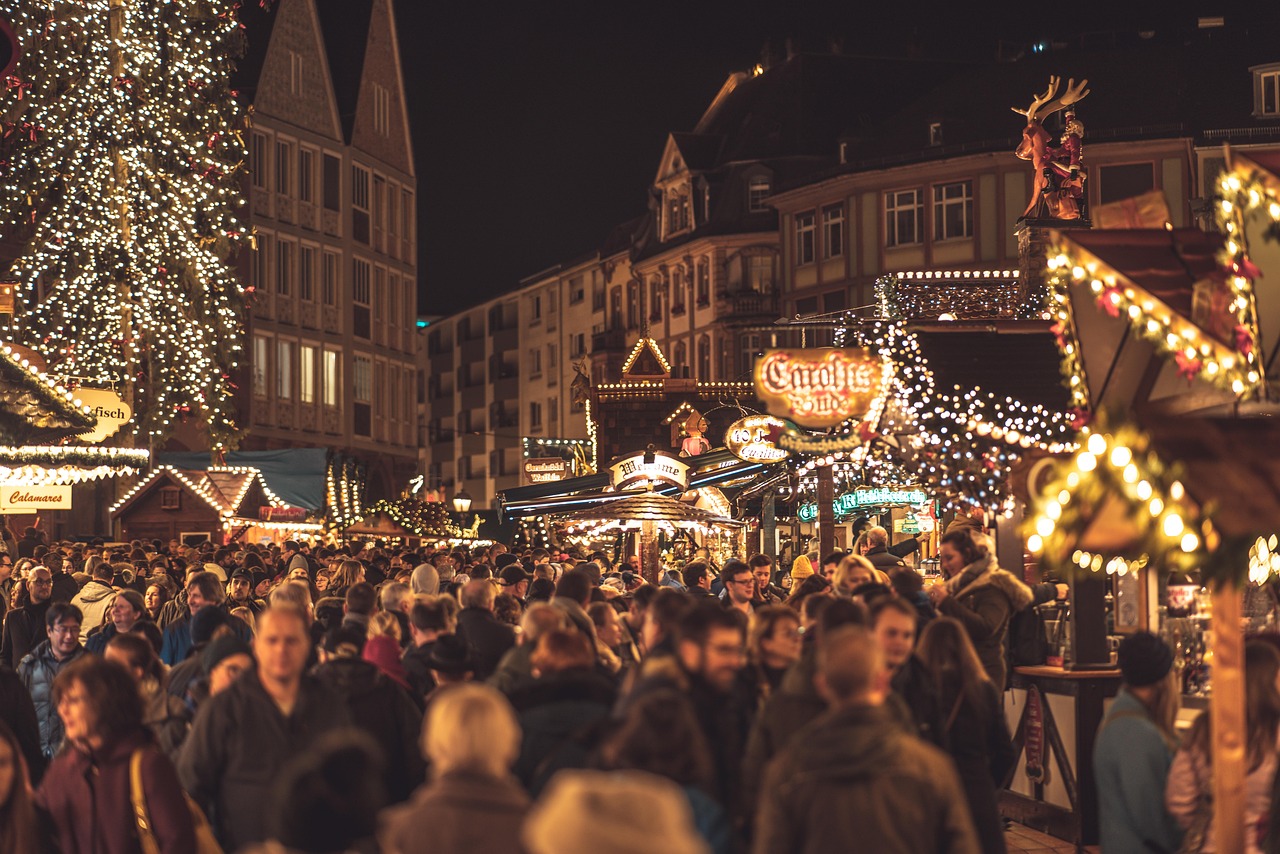
Christmas markets: millions of visitors, few square meters
Christmas markets are among the largest single seasonal crowd attractors in Europe, often operating for just 4–6 weeks but receiving visitor volumes comparable to major annual attractions.
Indicative annual figures:
- Cologne (Germany): ~4 million visitors
- Dresden Striezelmarkt (Germany): ~3 million
- Dortmund Christmas Market (Germany): 3–4 million
- Vienna (Austria): ~3 million across main markets
- Strasbourg (France): ~2 million
What “crisis” looks like in winter cities
In many European cities, resident concerns around overtourism are no longer abstract or anecdotal.
They are linked to daily, measurable impacts, particularly in historic centres and high-demand neighbourhoods.
Rising rents and housing pressure
One of the most consistent issues is the increase in rental prices and reduced availability of long-term housing, especially in central areas.
The growth of short-term rentals has contributed to competition for housing, pushing residents toward peripheral neighbourhoods and changing the social fabric of city centres.
Waste and cleanliness challenges
During peak tourism periods, cities experience significant increases in waste generation. Public cleaning systems are often designed for resident populations, not for sudden surges of visitors, leading to overflowing bins, litter in public spaces, and higher municipal costs for waste management.
Pressure on transport systems
Public transport networks face overcrowding, particularly around major attractions, shopping streets, and Christmas markets.
Residents report longer travel times, reduced comfort, and congestion that affects everyday commuting rather than only tourist movement.
Crowding: daily life becomes impossible
Streets and squares are permanently saturated, basic errands take longer or become inaccessible, noise levels rise sharply, and residents are effectively pushed out of their own neighbourhoods, reinforcing the feeling that historic centres are no longer designed to function as places to live, but as spaces exclusively optimised for visitors.
Energy and utilities stress
In colder months, high occupancy rates in hotels and short-term rentals can contribute to temporary spikes in electricity and heating demand, particularly in dense urban cores. While this rarely causes shortages, it does increase operational pressure and costs for cities already managing winter energy demand.
A growing sense of displacement
Beyond infrastructure, many residents express concern that city centres are increasingly designed around visitors rather than daily life, prioritising short-term consumption, retail, and events over local services, housing, and community spaces.
How Horwath HTL supports cities facing overtourism
Horwath HTL works with municipalities and destination authorities to manage overtourism as a structural issue, not a temporary inconvenience.
Our expertise includes:
- diagnosing seasonal and spatial pressure points
- modelling visitor flows and peak-load scenarios
- defining realistic capacity thresholds for urban destinations
- designing integrated visitor-management strategies
- aligning tourism policy with liveability and sustainability goals
As holiday travel intensifies across Europe, the destinations that succeed will be those that manage tourism, not just promote it.