Tourism Insight
Beyond the final whistle: how mega sporting events transform cities
As Europe’s most prestigious club football event approaches Budapest, attention is increasingly turning not only to the spectacle on the pitch, but also to the broader impact such mega sporting events generate for host cities. Today, football games such as the UEFA Champions League Final extend far beyond sport itself — serving as powerful catalysts for tourism growth, international visibility, infrastructure activation, and long-term economic development.
Positioning a destination for the global stage
Today, football games such as the UEFA Champions League Final extend far beyond sport itself — serving as powerful catalysts for tourism growth, international visibility, infrastructure activation, and long-term economic development.
Hosting such a global sporting event goes well beyond the final whistle, it is about positioning the destination on the global stage, attracting international visitors and investment, and creating experiences that resonate long after the matchday is concluded.
Authors


Sports diplomacy and Budapest’s growing international role
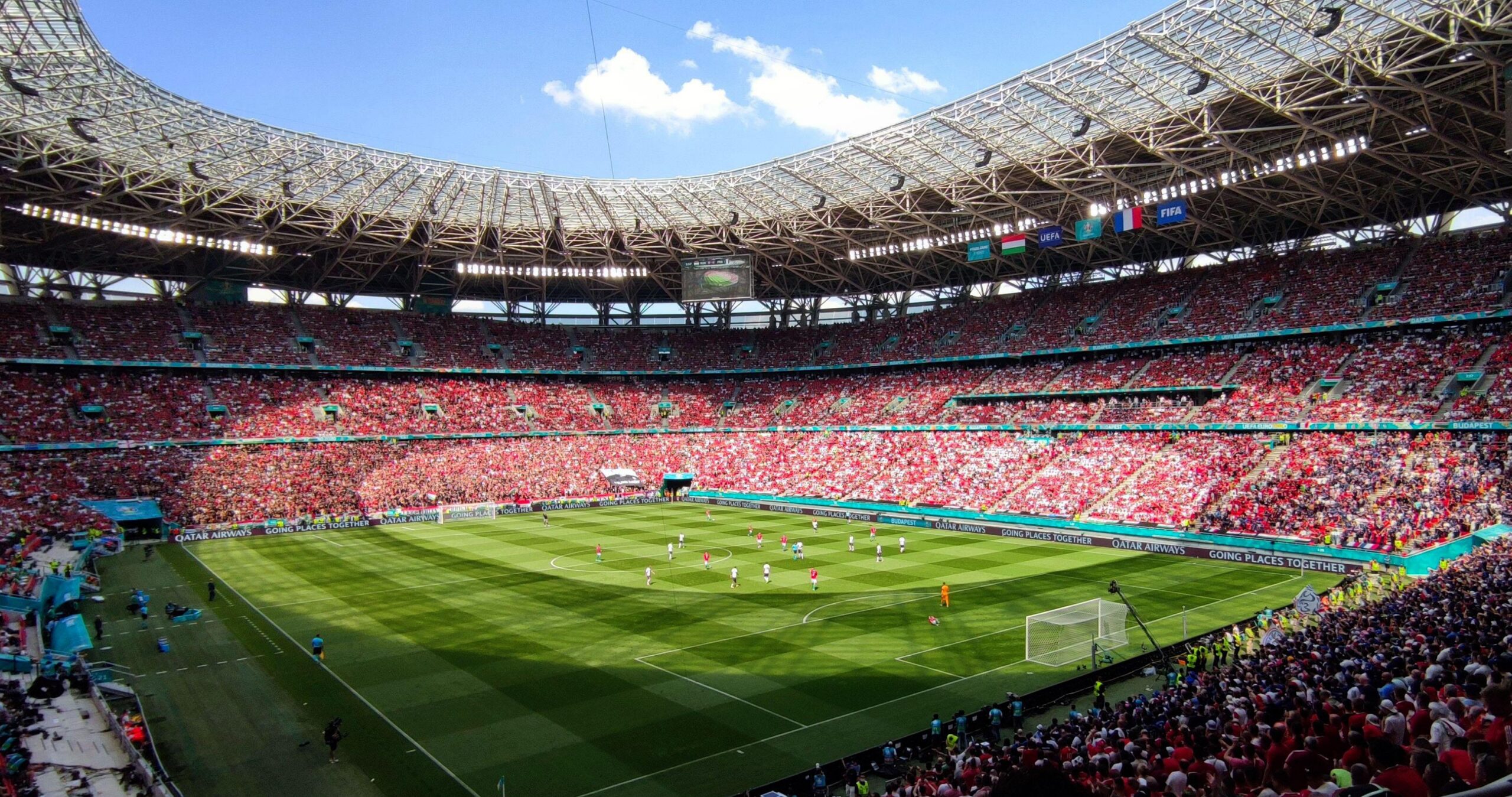
Over the past decade, Budapest has steadily evolved into one of Europe’s emerging international sports event destinations. This progression has been supported not only by major infrastructure investments, but also by the city’s growing ability to successfully organize globally recognized sporting events across multiple disciplines such as aquatics, athletics, and handball. Since the opening of the Puskás Aréna in 2019, the city has hosted a growing number of high-profile UEFA events, including matches during UEFA EURO 2020, the 2020 UEFA Super Cup Final, the 2023 UEFA Europa League Final, and numerous international fixtures relocated during the COVID-19 period.
This progression reflects more than simply stadium infrastructure investment. It demonstrates how Budapest has gradually established itself as a reliable and strategically important partner within UEFA’s international event network. In today’s increasingly competitive global sports environment, cities capable of consistently hosting large-scale international events strengthen not only their tourism appeal, but also their geopolitical and diplomatic visibility through sport.
For Budapest, the past decade has demonstrated how strategic investment in sports infrastructure and event hosting can accelerate the city’s emergence within the European major events landscape. The Champions League Final represents not only a sporting milestone, but also another step in Budapest’s broader international positioning strategy through sport.
Beyond the growing international visibility generated by these events, Budapest’s tourism and hospitality performance also demonstrates how major sports infrastructure and recurring global event hosting can contribute to broader destination resilience and recovery. By 2025, Budapest had already surpassed its pre-pandemic tourism volume, recording close to 10 million guest nights.
The hotel market’s commercial performance has recovered even more strongly, especially in view of substantial new hotel supply entering the Budapest market during and after the pandemic period. The timing of this recovery has closely coincided with Budapest’s increasing role as a recurring host destination for major international sporting events.
Increasingly, sport is becoming not only an entertainment product for Budapest, but also a strategic economic and tourism development tool.
Tourism and economic impact at scale
According to UEFA’s official impact assessment, the 2024 UEFA Champions League Final generated more than €91 million in Gross Value Added (GVA) for London’s economy and supported approximately 1,400 full-time equivalent jobs across tourism, hospitality, transportation, retail, and event-related services.
The tourism component represented the largest contributor to this impact. More than 77,000 visitors travelled specifically for the event, with approximately 90% arriving from outside the United Kingdom. This influx of international visitors generated an estimated €68 million in direct visitor spending across accommodation, food and beverage services, transportation, entertainment, and retail sectors.
Average hospitality spending reached approximately GBP 286 per visitor per day, while the event attracted a global television audience exceeding 120 million viewers. With public organizational costs estimated at GBP 10.4 million and a reported return-on-investment ratio of approximately 5:1, the event demonstrated how existing infrastructure combined with global sporting brands can create highly efficient economic outcomes.
Importantly, the economic benefits of such events are highly concentrated within urban hospitality ecosystems. Hotel occupancy rates typically approach full capacity during event weekends, while premium hospitality, fine dining, nightlife, and entertainment venues experience significant increases in both footfall and average consumer spending. International sporting audiences also tend to demonstrate higher-than-average discretionary spending patterns, particularly within premium tourism segments.
Mega sporting events introduce new operational and tourism-related challenges.
The growing economic significance of mega sporting events has also introduced new operational and tourism-related challenges for host cities — particularly within the accommodation sector. Major finals frequently trigger extreme short-term hotel price inflation, creating affordability concerns for travelling supporters and placing significant pressure on local hospitality infrastructure.
The 2025 UEFA Europa League Final in Bilbao demonstrated the scale of this phenomenon. Following confirmation of the finalists, accommodation prices across the city surged dramatically, with several hotels increasing nightly rates from approximately €130 to more than €3,000–4,500 for the final weekend. Reports also indicated that some short-term rental apartments were listed at prices approaching €30,000 for a two-night stay.
While the Bilbao example illustrates the extraordinary tourism pressure generated by mega sporting events, direct comparisons with Budapest should be viewed carefully given the capital’s significantly larger accommodation capacity and tourism infrastructure.
Nevertheless, the sharp hotel price increases observed ahead of major finals remain an important warning sign for host cities and highlights the importance of strategic tourism and hospitality planning in ensuring that host cities maximize the economic benefits of mega sporting events while maintaining accessibility and positive visitor experience.
The new economics of global sports tourism
Mega sporting events are no longer simply about sport. They have evolved into global economic engines capable of transforming tourism flows, activating entire urban economies, and reshaping the international perception of host cities within a single weekend.
The figures behind recent UEFA Champions League Finals demonstrate this clearly: sold-out hotels, record-breaking international spending, overloaded flight routes, city-wide fan activations, and hundreds of millions of viewers engaging with host destinations in real time. Few industries possess the ability to generate such concentrated economic and emotional impact at a global scale.
Modern football audiences are not traditional tourists — they are highly engaged, experience-driven consumers willing to travel further, spend more, and pay premium prices in order to be part of globally significant sporting moments.
In today’s experience-driven economy, sport is no longer just entertainment — it has become one of the most powerful platforms for global destination positioning and economic activation.
With the growing convergence of sport, tourism, hospitality, and urban development, specialized advisory support can help clubs, cities, venue operators, and investors better understand how to capture long-term value from modern sports ecosystems — transforming global sporting attention into sustainable commercial growth, stronger destination positioning, and broader economic impact beyond the event.
The Weekend effect – and what comes after
The true value of mega sporting events is not measured by one sold-out weekend alone. The real opportunity lies in what host cities, hospitality operators, investors, and tourism stakeholders are able to build around the global attention these events generate.
Paris Saint-Germain and Arsenal may only play 90+ minutes, but the visibility, tourism exposure, commercial relationships, and international positioning created around it can influence a destination for years. Cities that understand this dynamic increasingly use mega sporting events not simply as spectacles, but as catalysts for long-term tourism growth, infrastructure development, hospitality investment, and global brand positioning.
In many ways, the match itself is only the beginning and the true winners are often not the teams lifting the trophy, but the cities capable of transforming global attention into long-term value.
As the global sports industry continues to evolve, the intersection between sport, tourism, hospitality, infrastructure, and commercial development is becoming increasingly complex and strategically interconnected. Understanding the mechanisms behind fan behaviour, destination activation, venue monetization, sponsorship ecosystems, and sports-led urban development is therefore becoming essential for clubs, cities, investors, venue operators, and governing bodies alike.
Frequently asked questions
What is the economic impact of hosting a UEFA Champions League Final?
Hosting a UEFA Champions League Final generates substantial economic benefits for the host city. The 2024 final in London produced more than €91 million in Gross Value Added (GVA) for the local economy, supported approximately 1,400 full-time equivalent jobs, and attracted over 77,000 visitors — approximately 90% from outside the UK. Direct visitor spending reached an estimated €68 million across accommodation, food and beverage, transport, entertainment, and retail, delivering a return on investment ratio of approximately 5:1 on public organisational costs.
Where is the 2026 UEFA Champions League Final being held?
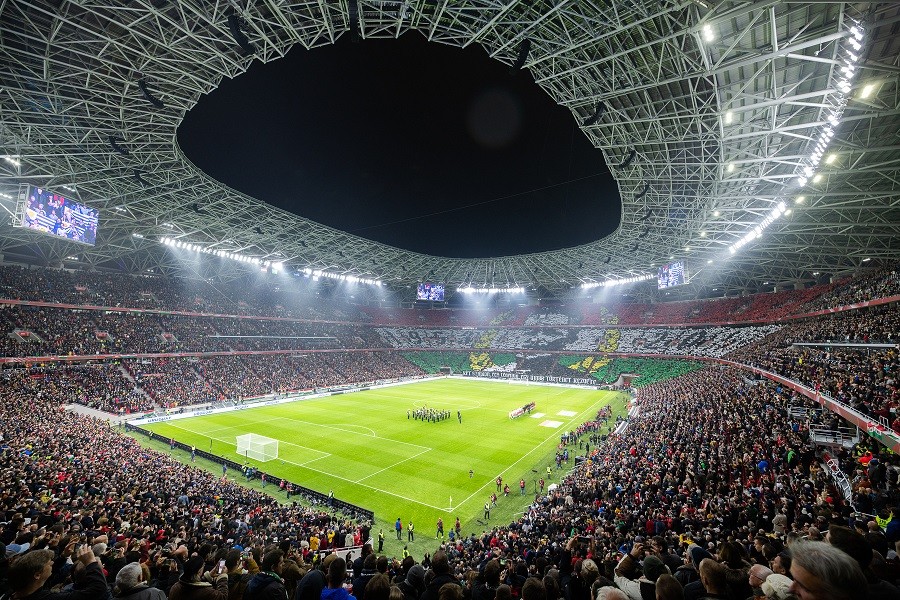
The 2026 UEFA Champions League Final is being held at Puskás Aréna in Budapest, Hungary, on Saturday 31 May 2026. The stadium has a capacity of approximately 74,000 and is Budapest’s flagship sports venue. Since opening in 2019, Puskás Aréna has hosted the 2020 UEFA Super Cup Final, UEFA EURO 2020 group stage matches, and the 2023 UEFA Europa League Final, establishing Budapest as one of Europe’s most active major event destinations.
How much do hotel prices increase during a UEFA Champions League Final weekend?
Hotel prices typically increase significantly during a UEFA Champions League Final weekend. In Budapest, average daily hotel rates are expected to rise from approximately €110 (market average) to around €690 on the final weekend — a 527% premium. For comparison, London saw hotel ADR rise from €269 to €630 (+134%) during the 2024 final, while Bilbao experienced some of the most extreme price inflation on record, with nightly rates rising from approximately €130 to over €1,200 during the 2025 UEFA Europa League Final.
How many visitors does the UEFA Champions League Final bring to the host city?
The 2024 UEFA Champions League Final in London attracted more than 77,000 visitors who travelled specifically for the event, the vast majority of whom were international visitors. The 2025 UEFA Europa League Final in Bilbao attracted over 85,000 international visitors. These figures represent ticket-holding attendees and accompanying supporters — the wider footfall generated across fan zones, city-centre venues, and public screenings adds significantly to total visitor numbers across the host city.
How do flight prices change around a major UEFA final?
Flight prices on routes into the host city typically rise sharply in the weeks and days before a UEFA final. For the 2026 Champions League Final in Budapest, average flight ticket prices are expected to increase from approximately €130 (market average) to around €520 on the final weekend — a 300% uplift. During the 2025 Europa League Final in Bilbao, flights rose from approximately €150 to €980 (+553%), and London saw fares increase from €180 to €650 (+261%) around the 2024 final.
What is the global television audience for the UEFA Champions League Final?
The UEFA Champions League Final consistently attracts one of the largest global television audiences in sport. The 2024 final in London drew an audience exceeding 120 million viewers worldwide, while the 2025 UEFA Europa League Final in Bilbao attracted over 125 million viewers. This global broadcast reach significantly amplifies the destination marketing value of hosting the final, exposing the host city to a mass international audience in real time.
Why is Budapest hosting the UEFA Champions League Final in 2026?
Budapest has earned the right to host the 2026 UEFA Champions League Final through a decade of strategic investment in world-class sports infrastructure and a proven track record of delivering major international events. Since the opening of Puskás Aréna in 2019, Budapest has hosted the UEFA Super Cup, UEFA EURO 2020 matches, the UEFA Europa League Final, the World Aquatics Championships, the EHF European Handball Championship, and the World Athletics Championship — establishing the city as a trusted and strategically important partner within UEFA’s international event network.
What long-term tourism benefits do cities gain from hosting major sporting events?
The long-term tourism benefits of hosting a major sporting event extend well beyond the event weekend. Cities typically gain increased international destination awareness, stronger positioning within global travel markets, and higher rates of repeat visitation as first-time visitors convert to returning tourists. Budapest had already surpassed its pre-pandemic tourism volume by 2025, recording close to 10 million guest nights — a recovery that has closely coincided with the city’s expanding role as a recurring international sports host. Social media amplification generated by attending fans also creates an organic and lasting promotional legacy that traditional destination marketing campaigns rarely replicate.
How does a major football final affect local restaurants, bars, and nightlife?
Restaurants, bars, and nightlife venues in the host city typically experience a significant uplift in both footfall and average spend during a major UEFA final weekend. International football supporters tend to exhibit higher-than-average discretionary spending patterns, particularly within premium dining, entertainment, and hospitality segments. Venues across the host city benefit from the extended fan presence, as supporters commonly arrive two to four days before the match and remain in the city for at least one day afterwards.
How should hotels and hospitality businesses prepare for a UEFA Champions League Final in their city?
Hotels and hospitality businesses should begin strategic preparation well in advance of a UEFA Champions League Final. Key priorities include dynamic pricing strategies that balance revenue maximisation with reputational risk, early staff resourcing and training, advance supplier contract negotiation, and dedicated fan-facing service protocols. Operators should also plan for the extended demand window — supporters typically arrive several days before the final and depart shortly after — and structure occupancy and F&B strategies accordingly.
Sports advisory practice
Through its dedicated Sports Advisory practice, Horwath HTL Hungary supports stakeholders across the sports industry in navigating these evolving dynamics — combining expertise in hospitality, tourism, real estate, sponsorship, and strategic development to help transform sporting assets and global event exposure into sustainable long-term commercial value.
| László Bene is Director of Sports Advisory at Horwath HTL Hungary, where he specializes in the commercial and strategic development of sports-related assets, partnerships, and investment opportunities. With a background spanning hospitality consulting, sponsorship sales, and sports business advisory, he brings extensive experience in stadium-related commercial strategies, sports-led tourism concepts, and long-term revenue development across the international sports industry. Prior to his current role, László contributed to the monetization and partnership strategy of major sports and entertainment properties including Ferencváros Football Club, Groupama Arena, and MVM Dome. Earlier in his career at Horwath HTL, he participated in more than 80 tourism, hospitality, and feasibility projects across Hungary and the wider CEE, SEE, and CIS regions, focusing on market analysis, strategic development, and investment advisory. |  |
| Balázs Füredi is a Senior Consultant at Horwath HTL Hungary, where he contributes his expertise in hotel sales, and research to a variety of projects. His role involves preparing and conducting in-depth research, writing detailed reports, and performing complex calculations, providing clients with robust, data-driven insights. Balázs brings a lifelong passion for sports and football to the Sports Advisory business line at Horwath HTL Hungary. |  |