
Case Study
Buahan, a Banyan Tree escape
April 2026
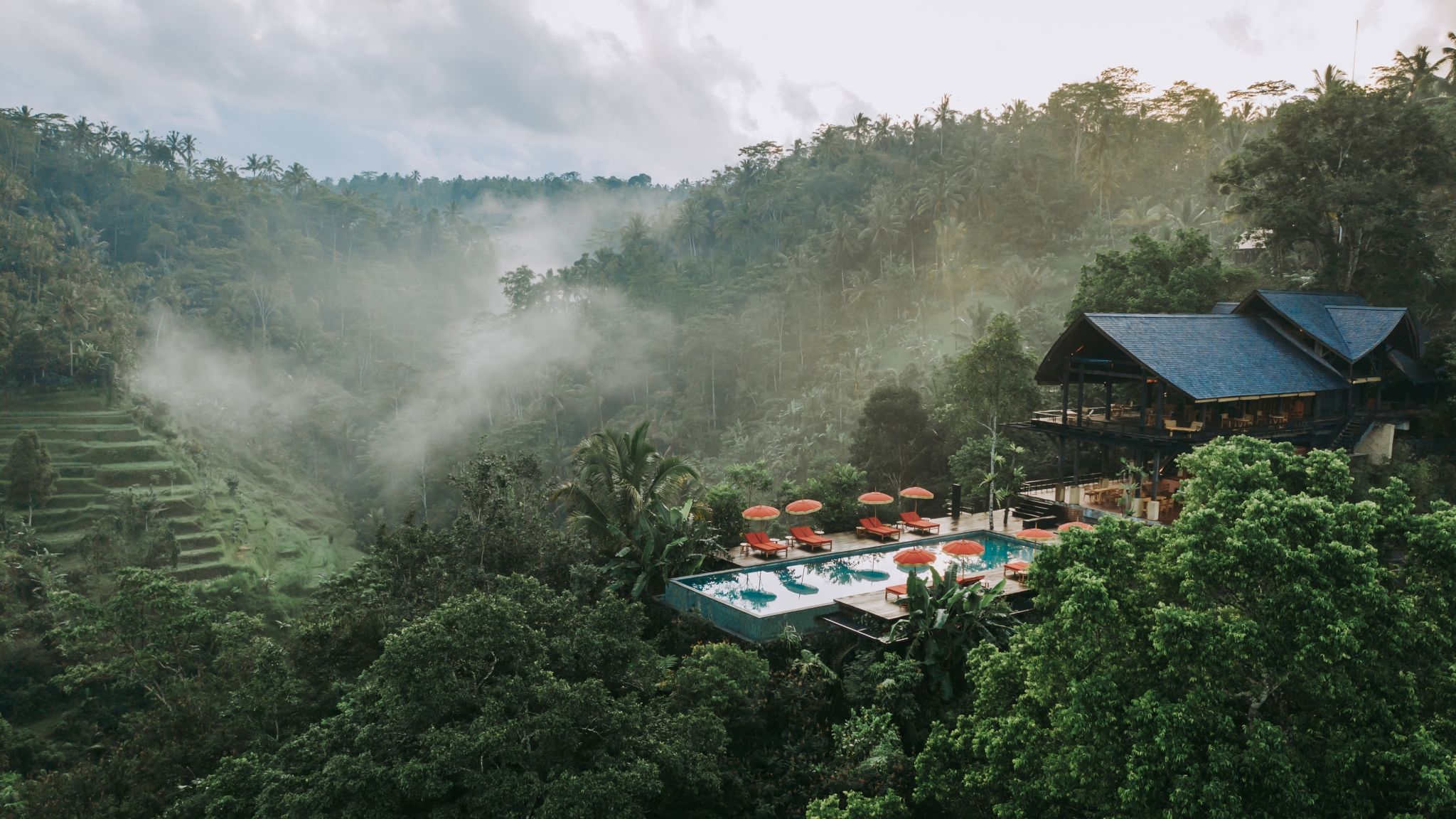
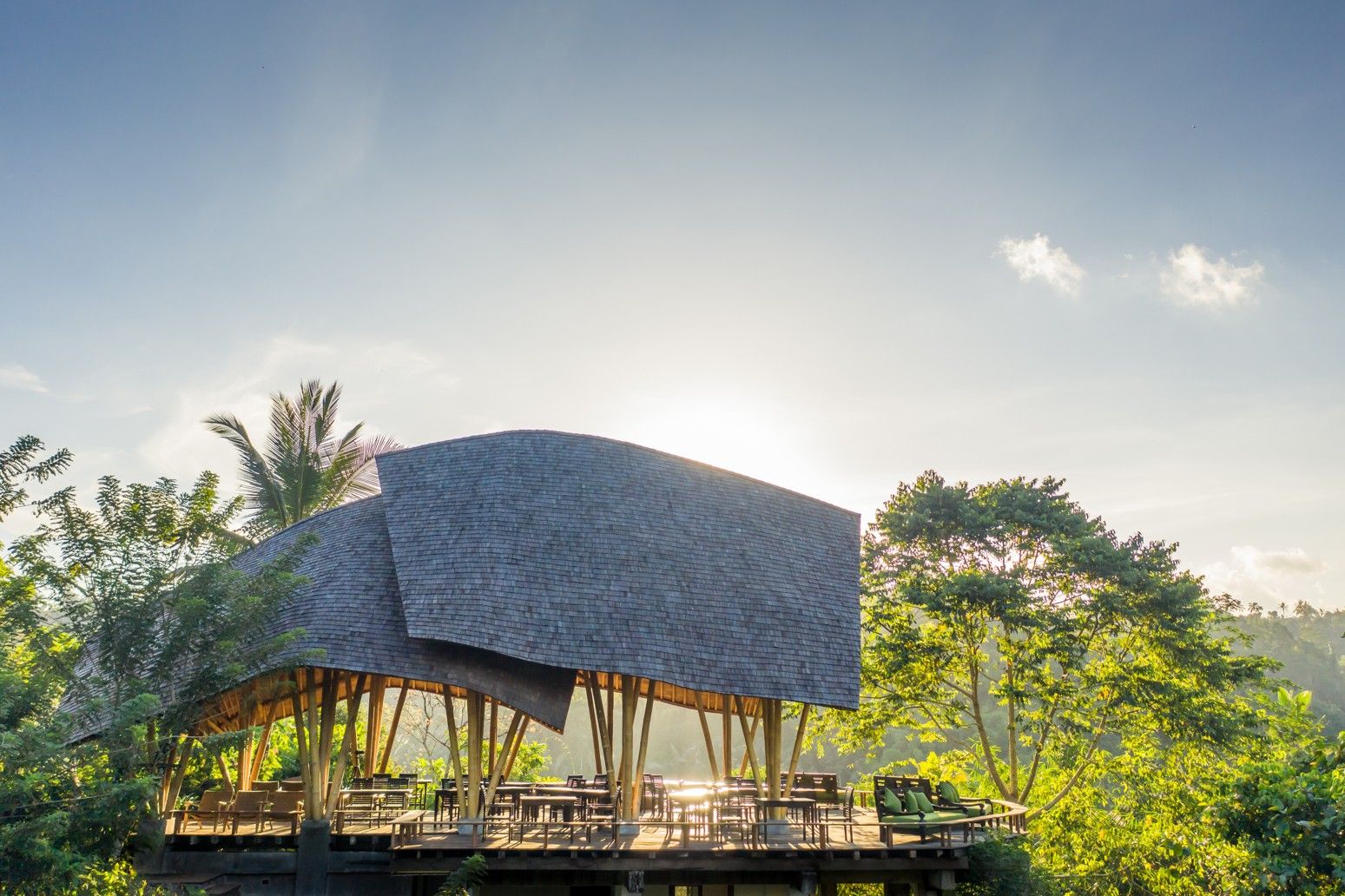
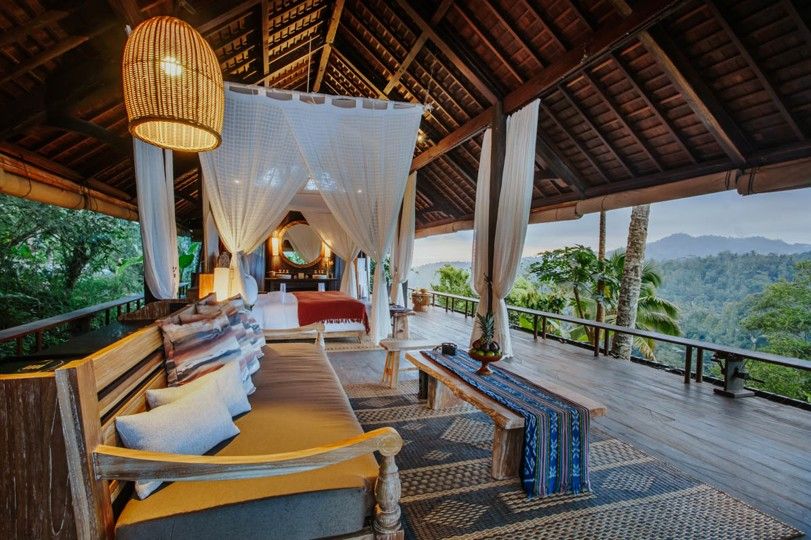
Buahan, a Banyan Tree Escape is a 16-key open-air luxury retreat in the highland valley north of Ubud, Bali in Indonesia. Built around a “No Walls, No Doors” architectural philosophy, it is the first fully open-air property in the Banyan Group portfolio — and one of the most formally recognised sustainable luxury properties in the world.
Outdoor Lodging – from experiment to asset class
The project took 21 years to realise, weathering two Bali bombings, SARS, two financial crises, a pandemic, and 16 design iterations before opening in May 2022. The result is a property commanding a premium ADR of USD 700–850 with a 35–40% GOP margin — without a ballroom, without air conditioning, and without the conventional amenity stack luxury resort underwriting typically assumes.
Patience, site specificity, and community integration are not obstacles to returns — they are critical drivers of long-term success.
Bali’s luxury hospitality market had converged on a formula: enclosed villa privacy, heavily designed interiors, curated infinity pools. Buahan answered a different question — whether luxury could be achieved through absence rather than addition. The answer is a product category that did not previously exist in Bali: wilderness-grade immersion at luxury-grade service levels, with neither compromised to accommodate the other.
Awards followed swiftly: Two MICHELIN Keys, Condé Nast Traveller Gold List, TripAdvisor’s #1 Sustainable Hotel in the World, TIME’s World’s Greatest Places, and AHEAD Awards Global Winner for Landscape & Outdoor Spaces — among others.

Open-air balés
Years in development
GOP margin
Local hiring
Five lessons for outdoor lodging development
Buahan’s performance offers transferable principles for developers, operators, investors, and sustainability advocates considering nature-immersive luxury.
- Concept integrity compounds over time. 21 years and 16 design iterations produced differentiation that cannot be easily replicated. The cost of concept drift is higher than the cost of patience.
- Site specificity is a competitive moat. A 4-month cultural survey preceded any design decision. Properties genuinely of their place — not merely located in one — cannot be commoditised or out-spent.
- Low key count is a strategy, not a constraint. 16 keys enables intimacy, operational control, and pricing integrity. Low key count luxury deserves its own underwriting framework — not benchmarking against full-service resort metrics.
- Community integration generates operational value, not just social value. 80% local hiring, local sourcing, and village-based experience partnerships are core to product quality — not CSR. Local knowledge cannot be taught, and defines the cuisine, the service, and the property itself.
- Sustainability and profitability are not in tension at the luxury end. A 35–40% GOP margin achieved with no air conditioning and a minimal infrastructure footprint demonstrates that premium positioning and low-impact operations coexist. Sustainability at this level does not compress margins — it justifies them.
What this model demands
Building and operating a property like Buahan means confronting challenges that fall outside the standard luxury-resort risk register. The full case study examines each in depth; the headline themes are:
- The environment is part of the product. Rain, wind, insects, and wildlife are permanent conditions around which the operation must be designed — not risks to mitigate.
- Natural materials demand a different maintenance philosophy. Constant preventive attention; operators using conventional villa cycles will underestimate both frequency and cost.
- Expectation misalignment is the costliest failure. Pre-arrival expectation setting at Buahan is a marketing function, not a guest services one.
- The service culture cannot be imported. Escape Hosts are culturally grounded and at ease in a natural environment — qualities difficult to train and impossible to source from a conventional hospitality labour market.
- Community partnership requires active maintenance. Launch-phase engagement is not enough; relationships with farmers, artisans, and village institutions must be ongoing, reciprocal, and benefit-sharing.
A replicable proof of concept
Buahan is the founding case study for Banyan Group’s Escape sub-brand. Four additional properties are in the pipeline — in Tanzania, Mexico, Indonesia, and the Philippines — reflecting a deliberate thesis: the appetite for nature-immersive luxury is global, and the product is transferable to ecosystems and cultures beyond Bali. Each will require the same discipline and depth of site-specific research that defined Buahan’s 21-year process.
This distinction matters particularly in Asia Pacific — a region holding some of the world’s most ecologically sensitive landscapes, culturally layered communities, and fastest-growing luxury travel markets. The opportunity is significant. So is the responsibility.
The properties worth building are the ones the market cannot replicate easily.
Done well, outdoor lodging development preserves landscapes otherwise facing less careful development, generates genuine economic benefit for communities tourism too often extracts from, and produces assets with a depth of character the market increasingly values and rewards. Done poorly, it degrades the very qualities justifying the investment.
Buahan demonstrates what the former looks like in practice: a property commercially strong because it is ecologically and culturally responsible. That is the standard toward which the region’s outdoor lodging sector should be developing.
Explore the full case study
What Buahan Really Took to Build — and What It Proves
The full case study — including the 21-year development timeline, financial performance detail, operational frameworks, community integration model, and the conditions Buahan’s performance actually depends on.
Contact us for the full case study or to discuss outdoor lodging development and investment underwriting.
Prepared by Horwath HTL in collaboration with Banyan Group and the Asia Pacific Outdoor Lodging Association (APOLA).